Emergency Flight Landing on a Flat Earth Coverup
By Richard
Before we discuss flights on the flat earth, let’s look at the facts that we can agree on:
- War with China is a distinct possibility with the Twain situation
Europe and North America is already at war with Russia, though it’s a proxy war
There are thousands of flights a day from Asia to Europe
The flight times have been established for cities
Now, you have heliocentric believers and geocentric believers. The heliocentric believers would have to admit that flying times would be shorter on a flat earth – IF they suspend their disbelief in a flat earth – as this comes down to mathematics.
Now, we’ll take it from there.
Everyone that is flying from Europe to South-East Asia, for example, is told how long their flying time would be. Of course, this would vary according to which country in SE Asia they are flying to. When passengers are in their seats, they probably are shown the flight pattern they are taking.

As flat earthers, we know that they are really flying over Russia and China if they are coming from the UK, but they are not told that. They are told that they are flying over the Middle East, India and on to Asia. They are given the right time or the approximate time, at least.
The problem comes when there is an emergency landing. Now, with the emergency landing that happened last year with a young mother that died on the plane, they had no option but to leave here there for 8 more hours until they reached Germany, as they were flying over Russia. Had we not been at war with Russia, you can be sure the plane would have landed in Russia.
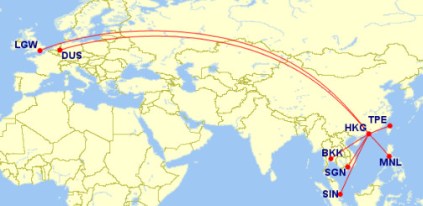
The flight from Hong Kong to the UK, flies over the breadth of China and through a good part of Russia (which looks like from Lake Bakul region).
Now, if we are at war with China – even a proxy war – China will probably still allow flight over their country, as Russia allows it. I believe they do this to keep up the world-wide conspiracy that the earth is a globe.
All of this is an educated guess on my part but it seems to make sense. If China, indeed comes to the decision to not allow flights over their country, the West will still act like all is normal; that the earth is still a globe. If there is a proxy war with China, and if China decides to close its airspace, what would it do to those who are flying from Europe to South Korea, for example?
Hours would have to be added to their flying time, and the sheeple will accept this. But to flat earth believers like us, we know that an alternative route had to be taken because of diversion. The passengers will not be told this. They only thing that the airlines will be forced to change and tell the passengers is the amount of time it takes.
The above holds true IF Russia decides not to allow flights to fly in their air space. Added time will have to be added. The passengers will still see the same flight pattern on their screens but the time will be longer.
Now, the scenario that will really catch the respective governments in a lie is, if a flight going or come from SE Asia, flies over Russia and there is serious mechanical trouble, they will be forced to land in Russia. They would not have the option of flying on for another eight hours, as in the case of a British lady who deid on the plane (most probably by the result of the jab, but that is another story).
The following is just a possible scenario, which could really happen (with a bit of humour thrown in). If an emergency situation happens over Russia, the passengers will see that they are not monsters that their media makes them out to be. You can be sure that Russian mechanics will repair the plane, give the people something to eat, and perhaps try to sell them Matryoshka Dolls for a souvenir!
If this happens, then, prayerfully, the passengers will be able to connect the dots; to see that there are two cover-ups: 1 That they were lied to about the flight pattern, and; 2 That the Russians are not bad people. Whether they are deep enough thinkers to do more research to discover the earth is flat is another matter.
When people are told that they have to make a emergency landing, that means at the closest airport. When they realise that they have to fly, say, 2,000 miles from their course to make an emergency landing, some people will seriously question the flight path they were given.

Planes that can fly longer distances makes it easier for the airlines and government to cover up their lies. For example, back in 1970 my family and I flew from JFK Airport in New York to Vienna, Austria. The planes back then could not fly that distance without stopping – at least with the plane that we were on. We took off from JFK Airport in New York and we made a schedule stop in Reykjavic, Iceland. There was another stop in Shannon, Ireland, then we flew on to Vienna, Austria.
At the time I thought it strange -all the way north to Iceland. But I didn’t think much else about it. Now, a flight between the same cities, passengers would be told that they were flying over the Atlantic and get by with it, as passenger planes today have longer range between refuelling.
As to the pictures that you see here of flights from Hong Kong to London, you see where one is more honest (pic. 1), and the other completely circumvents China and Russia.
With pic. 3, from NY to Vienna, the flight is well below Iceland. These flights actually go up along the east cost of Canada, near Greenland and on to Iceland but the passengers won’t know it if there are no stop-overs.
Summary
For those who have already flown from Europe and Asia, remember the time it took. And, if the situation should change with Russia, and Russia closes its airspace, and afterwards you have to fly to SE Asia, record the time that it actually took you. If it takes substantially longer, that means you really went out of your way to fly the distance. Your airline ticket will probably cost more might due to the extra fuel cost. In short, watch the political situation, and keep notes of the flying time.
Wherever you go, have a good trip!

 The stars in the southern hemisphere do not revolve around the Earth’s south pole because there is neither one nor a “southern pole star” like Polaris. Imagine a planetarium dome with all the stars set inside of it, but the dome is so big that your point of view prevents you from being able to see the southern stars that are the furthest away from the centre, exactly under Polaris. They would be moving much more quickly than the Northern stars around the outside of the dome if you could see them from that angle, not, as they say, in the reverse direction around a Southern pole star.
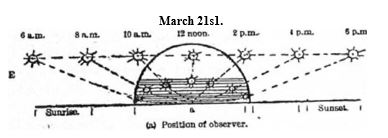 Heliocentrists believe lunar eclipses are caused by the ball-Earth occulting the Moon. The Sun, Earth, and Moon orbs align like billiard balls, casting the Earth’s shade onto the Moon. This argument is wrong for heliocentrists because lunar eclipses have occurred and continue to occur when the Sun and Moon are still visible above the horizon! The three masses must be lined in a 180-degree syzygy for Earth’s shadow to fall on the Moon.
 We hear in the alternative media by people who call themselves Patriots, of “The woke generation,” denoting that this is a negative term. For example, “He’s awoke.” The people who use this term are either taken in by this lie or they are perpetrators. Those who have the big alternative website, I believe, are perpetrating the Orwellian “double-think,” as they should know better.
