
What Happens to a Space Suite in a Vacuum?
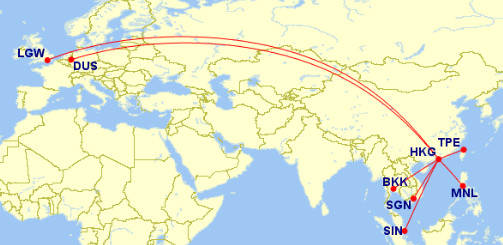
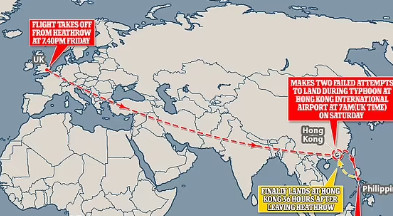
That’s because the earth is flat. For all this time we were told that to fly from Asia to the US, you don’t fly over Russia – you go directly over the Pacific Ocean.
.
.
Note: Below is basically a transcript of the audio. The underline text should be of interest to flat earthers. Below this article are some questions you might want to ask your globe earth believers and let them think about it for a while.
In our interconnected modern world, global air travel is often taken for granted. We assume that the skies are a global common, a highway system that allows people and goods to move freely between continents. This assumption is a cornerstone of globalization, economic stability, and, more quietly, American military power.
On December 22nd, 2024, Russia shattered that assumption. In a move that rippled through military command centres and airline operations centres, Moscow announced the immediate closure of its critical airspace corridors to all US-registered aircraft. This is not a symbolic gesture or a temporary diplomatic spat. It is a calculated strike at the heart of American global mobility, with profound implications that go far beyond longer flight times.
This move exposes a vulnerability that Washington has ignored for decades, challenging the very foundation of its military strategy and economic influence. But this is more than a diplomatic spat or a logistical headache. It’s a deliberate strike at the core of American power. Here are the four biggest takeaways you won’t hear in the mainstream news.
The most critical aspect of this airspace closure is that Russia did not act alone. This event transforms from a bilateral dispute into the opening move of a coordinated strategic challenge designed to overextend and exhaust the United States. This is evidenced by recent, tangible actions, not just backroom consultations. In November, Chinese and Russian military forces conducted joint air patrols near Alaska, a clear signal of their willingness to challenge US airspace dominance. Following Moscow’s move, intelligence sources indicate China is reportedly considering similar restrictions, and Iran has already signaled its support.
The strategy is known as “asymmetric exhaustion.” Instead of confronting American power head-on, where the U.S. excels, multiple powers are challenging Washington on different fronts simultaneously. While Russia weaponizes its airspace, China builds and militarizes islands in the South China Sea to control vital sea lanes, and Iran disrupts shipping in the Persian Gulf. Each action alone is a manageable crisis; together, they force the United States to defend an unsustainable global perimeter, stretching its military and economic resources thin.
This coordinated aspect is the most explosive part of the story. It suggests the formation of a strategic bloc intent on dismantling the U.S.-led international order piece by piece. If China follows Russia’s lead, the entire premise of American air superiority, particularly in the Pacific, could collapse.
The strategy is called asymmetric exhaustion. Don’t fight the hegemon head-on. Instead impose costs across multiple fronts until the centre cannot hold.
The immediate economic costs are clear: US airlines face an estimated $15 million per day in added fuel and operational expenses, and consumers will see ticket prices for trans-Pacific flights rise. But the real target is deeper—the economic architecture that underpins American power.
By forcing US carriers onto longer, less efficient routes, Russia is deliberately undermining the dollar-based global aviation system. As routes become less profitable for American carriers flying American-made Boeing jets, airlines may shift to more efficient aircraft built in Europe or China. This slowly chips away at demand for American manufacturing and, by extension, the industrial base that supports U.S. military aviation.
This is economic warfare in disguise. The goal is not just to impose temporary costs but to accelerate a long-term structural decline in the American military-industrial complex. The closure attacks the very engine that funds and builds the tools of American air power, turning commercial logistics into a weapon against Washington’s strategic endurance.
They’re not just closing airspace. They’re attacking the economic engine that funds American air power.
Since the 1944 Chicago Convention, the United States has built and maintained an international order where the skies were effectively an “American highway.” This agreement, signed before World War II even ended, established the rules for global aviation and locked in American dominance. After the Cold War, this access was considered absolute, forming the core of the U.S. Air Force’s doctrine: “Global Reach, Global Power.”
This doctrine was based on a simple, unshakable assumption: the U.S. military could fly anywhere on Earth, at any time, to project power within hours. Russia’s decision has single-handedly broken that 80-year-old assumption. For example, the deployment time for bombers stationed in North Dakota to reach the Indo-Pacific has now increased from 12 hours to 18-20 hours. This fundamentally alters the operational calculus for an Air Force built on speed and surprise.
The psychological impact of this shift cannot be overstated. For decades, every U.S. military operation was planned with the belief that access was a given. Now, that foundation has proven to be a privilege, not a right—and that privilege has been revoked.
For decades the skies were an American highway and everyone else just rented lanes.
Russia’s move is a masterclass in asymmetric leverage. It is using its vast geography—a permanent, unassailable asset—to inflict significant military and economic costs on the United States, a country that cannot retaliate in kind. Closing American airspace to the few Russian planes that fly there has no equivalent effect.
This demonstration of leverage is being watched closely by America’s allies, particularly Japan, South Korea, and Taiwan. They are asking a simple but corrosive question: If Washington cannot even guarantee its own flight paths, how can it guarantee their security against a threat like China?
This plants a seed of doubt that erodes America’s most important strategic asset: its global alliance network. When allies question the credibility of U.S. security guarantees, they begin to “hedge” their bets. They may quietly build stronger ties with China or soften their rhetoric toward Russia, seeking to secure their interests in a world where American protection is no longer certain. This slow fraying of alliances is how a superpower’s influence unravels.
This is how empires fall. Not through invasion but through irrelevance.
The closure of Russian airspace is not a temporary crisis to be managed but a structural shift that signals the definitive end of an era. For three decades since the fall of the Soviet Union, the United States operated as if geography didn’t matter and its dominance was permanent. This move is a stark reminder that power is fragmenting, geography is once again a weapon, and the world has become far more contested.
This is the new reality of a multipolar world—a world of friction, barriers, and strategic competition. The post-Cold War vacation from history is over.
The only question is how Washington will adapt to a world where it is no longer the sole superpower, but merely one power among several. That adaptation will define the rest of this century.
1 Why didn’t Russia close this airspace from the start of the war?
2 Why didn’t the US and EU stop flying over Russia from the start of the war?
3 Why would the US and EU worried about this?
4 Why have passengers been told that they are flying over other countries than what they really are, such as from Hong Kong to the US?
5 Why are flights going to take much longer?
6 Why wasn’t the Soviet airspace closed during the cold war?
1 Because the world governments, including Russia, wanted to keep the lie going about the globe earth. After all, Russia “sends astro-nots” into space,” too!
2 The same answer goes for the EU and other countries that are at war with Russia.
3 Because more people will wake up to the flat stationary earth, as it would start making people think and ask questions. Since the world’s governments have been lying to us about the nature of earth, it would be very embarrassing if they admit the truth now. They would lose all credibility of anything that they say in the future and what they said in the past.
4 To keep the passengers in the belief that earth is spinning globe. For, if we were on a globe, it would not make sense that certain flights have to fly to the far north when a more southern route would be more practical on a globe earth.
5 The flights will take longer, cost more in fuel for the obviously reason that military and commercial flights will really have to fly in southern latitudes to reach their destination because they have more land and ocean area to cover.
6 During the so-called “cold war,” other nations were allowed to fly over the Communist Soviet Union. If the Communists really wanted to harm Europe and the US without going to war, this could have been done. The reason why the airspace was not closed off is because, the Soviet Union wanted to keep the lie that we were on a spinning ball travelling through space with billions of other planets. Being that the Communists were anti-Christ and ant-Christian, they realized if they told the truth about construction of the earth – which they well knew – than their people would realise that we are a creation of God Almighty and that the Bible is, indeed, true. This, they could not allow, as their whole propaganda machine was based on evolution and that we were just a mere speck travelling through space at incredible speeds.

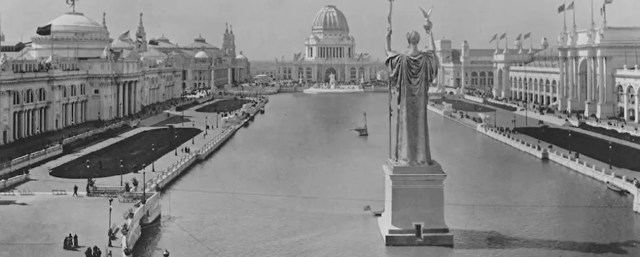
Ignore the picture of this guy as this is created using the fictitious belief that some create half human can create architecture like this.
.

.

There are some other questions that needs to be answered. I don’t know if we will ever learn them. Some questions I have in mind are?
One thing for sure, these fantastic buildings could not have been constructed by whom we are told; they were not constructed in such a short time; that we have been lied to in history. So, just because we have other unanswered questions doesn’t mean these fantastic buildings were built in such a short time. An unknown civilizations must have built these buildings all over the world – the question is, “Who”!
 Date: 12, December 2025
As a flat earth believer, we know that billions of dollars are wasted when the government gives money to NASA. Sure, they give something in return to show that they are doing something with the money but you can be sure that billions have been skimmed off the top by those at the top. It’s an easy way to become a billionaire.
Don’t get me wrong, AI can do many useful things and can help humans. But like many inventions – they can be used for good and for bad. In this short article, I’m talking about another evil that hasn’t been talked about before.
Now, think about AI. This is getting huge and the leaders in the AI world have raised and are raising money into the 10’s of billions of dollars. They say they need it for the infrastructure needed to generate huge amounts of electricity. However, they have raised many times more than what they profit each year. They have overly capitalized.
This is just a theory of mine but I think that it can come true. Think of banking, when an industry is an integral part of an economy they become “too big to fail.” Think of the banking crises in America. There was a law put in place to make it so these private banks don’t fail. The result? The government bailed them out.
With all that said, I will not be surprised that certain AI companies will become too big to fail and thus be protected by a law where the government bails them, out, too. Think of Donald Trump and his huge support for the AI industry. He said that we have to keep up with China, and in order to do that, the government will guarantee that they don’t fail. So, I will not be surprised to see Trump sign an Executive Order that will allow the government to step in and bail them out. The result? The billionaires will double their net worth and will not be held accountable for their actions.
Make a note of this, put this in your diary listing the source and date and see if this comes true or not. only time will tell!

The provided text, apparently an excerpt from a sermon or lecture, critically examines the concept of thanksgiving, contrasting the biblical mandate for constant gratitude with what the speaker perceives as the modern focus on endless requests to God. The speaker references several New Testament passages, particularly from Paul’s letters, to establish that Christians are called to live “with thanksgiving” in all circumstances. A significant portion of the text is dedicated to a comparison with Hindu religious practices described in a National Geographic article, asserting that this “ungodly antichrist religion” is characterised by constant asking and a complete lack of thanksgiving to its ineffective gods. Finally, the sermon connects the American Thanksgiving holiday to the ancient Israelite “Feast of Ingathering,” arguing that the Pilgrims’ experience and the subsequent proclamations, like the one by George Washington, re-established this biblical feast day in America as a time for national thanks to God for his sovereign provision, rather than petitioning for more.
For most of us, Thanksgiving conjures familiar images: a table overflowing with food, the warmth of family, and the drone of a football game in the background. It’s a cherished annual pause for comfort and togetherness. But does this modern celebration, pleasant as it is, capture the original, more profound meaning of the day?
The historical and biblical roots of Thanksgiving reveal a practice that is far more challenging, surprising, and transformative than most of us realize. It is not simply a day for feeling grateful when things are good, but a disciplined spiritual act with ancient origins, forged in desperation. Here are four principles that reclaim a deeper understanding of this holiday.
Principle 1: Prayer Is More About ‘Thanking’ Than ‘Asking’
At its core, the biblical concept of thanksgiving fundamentally reshapes the posture of prayer. The Apostle Paul’s teachings in Philippians 4:6 and Colossians 4:2 instruct that prayer should be foundationally offered “with thanksgiving.” The idea is not just to be grateful for answered prayers, but to make requests while actively giving thanks.
This stands in stark contrast to other religious practices. A 1971 National Geographic article describes the prayers of Hindu fishermen on the Ganges River as a constant series of requests for deliverance and provision: “Oh Ganja, oh Krishna, give us fish and fill our stomachs,” “rid us of our troubles,” “May our problems cease.” It is an unceasing petition for aid.
The analysis of this difference highlights a profound theological distinction:
Their prayers are always and continually asking, asking, asking, asking asking. And Paul says, “When you ask, you do it with thanksgiving… Everything that you do, you do with thanksgiving to God.”
This distinction is a powerful challenge, not just to other religions, but to our own modern habits. A look at contemporary Christianity reveals a dangerous drift toward this same posture. When preachers focus primarily on soliciting prayer requests, promising divine intervention in exchange for petitions, they risk turning God into a cosmic provider to be constantly lobbied. Our Christian religion, through a lack of knowledge of the word of God, has almost turned into the same thing: a culture of asking without the foundational discipline of thanking.
Principle 2: Thanksgiving Is an Ancient Israelite Feast
While we associate Thanksgiving with the Pilgrims at Plymouth, its origins go back much further. The American holiday, from a certain theological perspective, is a modern expression of one of the three major feasts God ordained for ancient Israel, a sign of a divine covenant being fulfilled by a specific people in a new land.
Exodus chapter 23 details these three required annual observances:
The Feast of Unleavened Bread: This celebration, also known as Passover, commemorated the exodus from Egypt.
The Feast of the Harvest: This was an offering of the “first fruits” at the beginning of the harvest cycle, a principle directly connected to the practice of tithing.
The Feast of Ingathering: This was a celebration at the very end of the agricultural year, after all the crops had been gathered from the fields.
The American Thanksgiving holiday aligns directly with this third ancient ordinance. It is not simply a historical parallel but, as the source argues, a fulfillment of prophecy.
God ordained only three feasts for Israel, of which Thanksgiving is one of them. Because Thanksgiving is the feast of the in gathering or the feast at the end of the harvest.
This connection reveals that millions of Americans participate each year not just in a national tradition, but in an ancient sacred pattern. From this viewpoint, they are acting as “God’s Israel people,” unknowingly observing an Israelite feast day in what is seen as “the place of reathered Israel.”
Principle 3: Gratitude Forged in Crisis, Not Comfort
The popular image of the first Thanksgiving is one of peaceful cooperation and bountiful tables. The historical account, as recorded by Plymouth governor William Bradford, tells a much more harrowing story. The Pilgrims’ gratitude was not a response to comfort, but to a miraculous deliverance from the brink of annihilation.
After losing half their population to famine and disease the previous winter, their survival depended entirely on their new crop. They were utterly isolated—England was months away by sailing ship, and there was no Red Cross to call, no welfare office to visit. They stood alone between survival and death by starvation. Then, a severe drought struck and continued from late May until mid-July. Their corn, the key to their survival, began to wither and die in the parched ground.
Facing extinction, the Pilgrims set apart a “solemn day of humiliation to seek the Lord by humble and fervent prayer.” What followed was seen as a direct answer. Though the morning was hot and clear, toward evening the sky became overcast and “sweet and gentle showers” began to fall, lasting long enough to thoroughly soak the earth and revive the dying crops. The harvest, and their lives, were saved. Their gratitude was not for mere abundance, but for survival itself.
God caused them, forced them, brought to them to a position where they had to get down on their knees and ask God to save their crops, which he then did in such a manner that they could not doubt but what God had done it… When those people came to that table on Thanksgiving, brother, sister, they weren’t just thanking the Lord for the food that was spread before them. They were thanking him for very life itself.
This raw, desperate gratitude born from the brink of annihilation reveals a deeper truth: thanksgiving is not a pleasant feeling for when times are good; it is a disciplined act of faith required when everything is on the line.
Principle 4: Gratitude Is an Action, Not an Emotion
This context of crisis leads directly to the final principle. In modern culture, gratitude is often treated as a passive emotion—a feeling of happiness that arises when circumstances are favorable. However, the biblical texts present thanksgiving not as a feeling but as an active, disciplined command to be followed in all circumstances.
Scripture repeatedly frames thankfulness as a direct instruction. Colossians 3:15 concludes a list of Christian virtues with the simple command, “and be ye thankful.” A few verses later, Colossians 3:17 expands the scope: “whatsoever ye do in word or deed, do all in the name of the Lord Jesus, giving thanks to God.” Gratitude is positioned as the foundation for every action.
Perhaps the most all-encompassing directive is found in 1 Thessalonians:
Rejoice ever more. Pray without ceasing. In everything give thanks: for this is the will of God in Christ Jesus concerning you.
This means that gratitude is not contingent on our circumstances or feelings. It is a conscious choice and a spiritual discipline to be practiced intentionally, whether in abundance or in scarcity. It is an act of will, not an emotional reflex.
A More Meaningful Feast
The true history and theology behind Thanksgiving point to a practice far deeper than an annual meal. It demands a posture of prayer that prioritizes thanking over asking. It claims a place in the lineage of an ancient, sacred Israelite feast. It is a response forged not in comfort but in the crucible of crisis. And ultimately, it is a divine command to be followed in every season of life.
This year, as we gather at the table, what might change if we embraced this more radical vision? What if we understood our thanksgiving not as a simple reaction to our blessings, but as a profound and disciplined act of faith—an echo of an ancient feast, offered in defiance of any circumstance?

This document synthesizes the central argument that contemporary societal problems—including constant war, extreme inequality, public ignorance, and environmental destruction—are not accidental byproducts of a flawed system but are the intended outcomes of policies deliberately engineered by a ruling class. This elite, an alliance of corporate and state power, actively cultivates hardship and dysfunction because it directly serves their interests in maintaining wealth, power, and global control.
The democratic process is presented as an illusion, with political deadlocks and partisan splits artificially created to maintain a status quo that benefits the rich and powerful. The ruling class employs a sophisticated apparatus of control, including mass media propaganda, perception management, and censorship, to keep the general public misinformed, distracted, and disempowered. The proposed path to meaningful change is a conscious and direct opposition to this agenda: fostering intelligence, seeking information, cultivating compassion, and embracing disobedience to counter the rulers’ desire for a compliant and ignorant populace.
The Core Thesis: Societal Hardship by Design
The foundational argument is that the pervasive negative conditions in society are the result of intentional actions by a ruling class. This perspective rejects the notion that these problems arise organically from a malfunctioning but genuine democratic process.
The Central Dichotomy: The analysis presents two competing explanations for why societal conditions are worsening for ordinary people while benefiting the wealthy and powerful:
Conclusion from Reasoning: The document asserts that basic reasoning and an understanding of human behavior make the second explanation far more likely. The consistent outcome where “billionaires and empire managers keep getting everything they want” while ordinary voters suffer points toward a system engineered for that specific result. The conclusion is stark: “Things are terrible because we are ruled by people who want things to be terrible.”
Motivations of the Ruling Class
The ruling class has specific, vested interests in maintaining a state of crisis and hardship for the general population. This dystopia is not an accident; rather, it “looks more or less exactly how they want it to look.”
The Utility of War and Militarism
Continuous conflict is a primary tool for global control and profit.
World Domination: Military force is used to control world resources and trade routes.
Suppression of Alternatives: It prevents foreign states from establishing different economic or political systems that could challenge the current world order.
Profit Motive: Waging war, and preparing to wage it, is described as “extremely profitable.”
The Necessity of Economic Inequality
Maintaining a vast wealth gap is crucial for preserving the elite’s power, which is understood as a relative concept.
Preserving “Monarch” Status: Extreme inequality allows the wealthy to live as “modern-day monarchs.” The principle is articulated as, “if everyone is king, then nobody is.”
Controlling Political Power: The public is kept with just enough spending money “to keep the wheels of capitalism turning” but not enough to fund political campaigns or acquire media influence, thereby neutralizing them as a political threat.
Power Dynamics: The relative power of the ruling class increases as the poverty of the masses deepens: “The poorer everyone is, the more powerful they are.”
The Strategic Value of Public Disempowerment
A population that is struggling is easier to control. The rulers have an “existential interest” in preventing the public from achieving clarity.
Preventing Uprising: If the public had the time, information, and mental acuity to understand the true state of affairs, the situation would become “mighty guillotini real quick.”
Cultivating Dysfunction: The rulers actively want the public to be “stupid, misinformed, distracted, sick, struggling, and suffering.” This creates a “mental fog” that inhibits critical thought and organized resistance.
The Profitability of Environmental Destruction
Ecological devastation is framed as a necessary component of a profit-driven economic system.
Externalizing Costs: The ability of corporations to “steadily increase profits” depends on offloading the costs of industry onto the environment.
Maximizing Shareholder Value: As long as corporations are free to pollute the air, fill oceans with plastic, clear rainforests, and poison drinking water, they can continue to grow and maximize value for shareholders.
Mechanisms of Control and Perception Management
An “alliance of corporate and state power” uses a range of tools to enforce its agenda and prevent the public from understanding the true nature of their society. The primary goal is to “obfuscate truth and clarity.”
Mechanism of Control Purpose
Mass Media Propaganda To shape public opinion and create a mental fog.
Lobbying & Campaign Donations To ensure political outcomes serve elite interests.
Censorship & Algorithm Manipulation To control the flow of information, particularly online via Silicon Valley platforms.
Mainstream Culture To promote “vapid” and “unedifying” content that discourages critical thought.
Education Systems To institutionalize ignorance and compliance from a young age.
Other Influence Operations Including the use of “AI garbage” to further muddy the information landscape.
These mechanisms are designed to stop people “from following the strings of our society’s ailments to the hands up above that are pulling them.”
The Mandate for Counter-Action
Awakening to the reality of this deliberate manipulation is presented as the essential first step toward revolutionary change. The solution is to embody the direct opposite of what the ruling class desires for the populace. This requires a conscious and determined effort from individuals.
The prescribed path to resistance is a direct inversion of the rulers’ goals:
The final call to action is for a total societal effort pushing in the opposite direction of the rulers’ agenda, as “truth and clarity paves the way to real revolutionary change.”
 Christian Flat Earth Ministry
Does East and West Curve?
Does East and West Curve?