
A Talk on Gravitation, Part 1
What is gravitation?
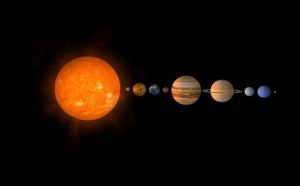 We are told a that gravitation exists throughout the universe is the reason why the smallest things fall down, such as a pebble to why planets remain in their orbits. Yet, scientists say we know very little about it. So, let’s explore this subject of gravitation in more detail.
But a difficulty meets one at the outset. How am I to write “something” about nothing? I cannot create, as some erroneously suppose the world was made, out of nothing. Paul says the things which are seen were not made out of “phenomena,” or things which do appear; but he nowhere teaches that they came out of absolutely nothing, except invisibility. Now, “Gravitation” has been created, not only out of invisibility, but out of nothing, except the vain imaginations of astronomical minds. I t was not “discovered,” but invented; and I shall proceed to prove that there is no such thing as the “attraction of Gravitation” in God’s universe, and that the phenomena supposed to countenance the theory are capable of other and more natural interpretations.
Of course, I speak of “Gravitation” in the astronomical sense of a universal power in all bodies, celestial and terrestrial, to attract, or pull one another together, with forces directly in proportion to their masses, and inversely as the squares of their distances. So that terrestrial attraction and phenomena will be seen to be only a small part of this question of Universal Gravitation. The former we may explain by weight and currents; but the latter we utterly deny. Let us try, in the first place, to realize what is meant by, and implied in the astronomical theory of gravitation, and its Universal Attraction.
According to this idea, every body in the universe, however large or small, has the power, by some means or other, to attract, or pull towards itself, every other body in the universe, however near or distant. Yea, not only is every body supposed to have this power, but the power is said to be in actual operation every moment of time for ever. So that, if I hold an apple in my hand, it is connected with, and pulling at all the apples in the world; all the pears and plums, all the trees, gardens, walls, houses, all the stones, rocks, rivers, and mountains; yea, and every separate drop of water in the ocean, and every grain of sand on the sea shore. And these are all pulling at the apple. Yet it remains passively on my hand, while I study gravitation, or decide whether I will eat the apple now, or leave it for further experimentation. This apple ought to dance about, or at least to show some symptoms of the awful internal struggles going on within it. Perhaps it has learned the art of appearing passive, an art which some astronomers seem to acquire, and to keep a quiet and serene countenance, while internally tortured with ten thousand doubts and pangs. Ten thousand! Yea, ten thousand times ten thousand gravitating cords or strings are pulling at it! For we must remember that sun, moon and stars, and supposed millions of millions of “ other worlds than ours ” are each and all interested in that apple; and they send out their innumerable long and filamentous fingers to clutch it out of my open hand. Yet it remains outwardly unmoved in serene and blushing passivity. I shall have to eat it, threads and all, with whatever tentacles, or other attractive matter may be attached to it! What a mission! But there is such an attractive force, either in the apple, or in the natural taste God has give us for common fruit, as well as for common sense, that I take all risks and disappoint the sun and stars. I am glad that Newton was led to muse over an apple falling to the ground by its own weight, when the stalk was rotten. He would have mused more had it “fallen” upwards.
(Why should an apple, or any fruit for that matter, fall from the tree it came from? Since the tree is a bigger mass, and the bigger mass attracts the smaller – as we are told – then no fruit should fall at all!)
To be continued.


 “One of the chief objects,” says Sir H. H. Howorth, “of this book, is to show that the Glacial theory, as usually taught, is not sound; but that it ignores, and is at issue with, the laws which govern the movements of ice, while the geological phenomena to be explained refused be equated with it. This is partially acknowledged by the principal apostles of the ice theory. They admit that ice as we know it in the laboratory, or ice as we know it in glaciers, acts quite differently to the ice they postulate, and produces different effects ; but we are bidden to put aside our puny experiments which can be tested, and turn from the glaciers which can be explored and examined, to the vast potentiality of ice in shape of portentous ice-sheets beyond the reach of empirical tests, and which we are told acted quite differently to ordinary ice. That is to say, they appeal from subsidiary experiments to a prior argument drawn from a transcendental world. Assuredly this is a curious position for the champions of uniformity to occupy.”
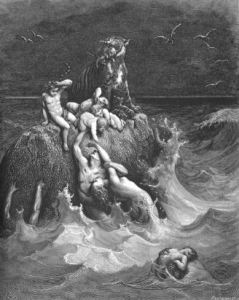 Theory, he ignores and repudiates the Universal Flood of Holy Writ, and considers it “propriety to leave the Biblical account alone.” He quotes from Sedgwick’s Paraphrase of Bacon, “the impossible task of equating science and faith.” He says;—
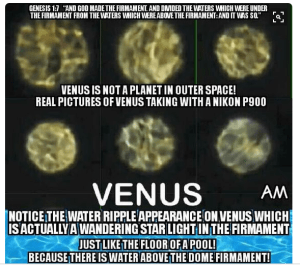 It is the pride and boast of Modern Astronomy, that, compared with the ancient systems, it has introduced order for confusion, simplicity for complexity, and placed a comprehension of the universe within the reach of all. And the boast is not without some seeming justification; for if the modern system as ordinarily presented, be compared with the epicycle systems of the past, the former appears to much greater advantage.
 It is acknowledged as an axiom by good thinkers everywhere that all truth is harmonious, and that no one fact in nature can be contradicted or subverted another fact. It is not so with error, or even with plausible theories; these, owning to our limited knowledge, may appear harmonious for a time, but if one fact in nature, or in history, be found out inconsistent with and contradictory to those theories, this fact alone would be sufficient to stamp the theories as false. So it has been proved with globular theory.
 A rational conception of the physical or organic form of the universe cannot be entertained in any logical mind consistent with any idea of the earth as a rotating globe. That which destroys conception of the centre and circumference of the universe also destroys the idea of its form— the assumption that space is eternal and illimitable prevents any conclusion that the cosmos or world of existence, has any centre, for how could a centre be conceived in a universe whose circumference infinite space! The principles of modern astronomy are thus suicidal— the hypothesis demands the action of tangential and centripetal forces to hold worlds in position— and this “law” of the two potential forces, logically analysed, refutes the system and destroys its claims.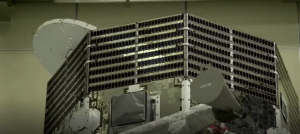
 As you may have heard recently there is a planned satellite flight to Mercury by the European-Japanese space agencies. This is due to take place in 15 months. This is a continuing con of the public that there is actually flights to other planets. So, let’s take a look at Mercury.
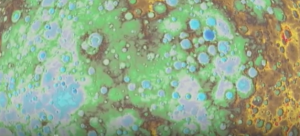 The surface of the Mercury satellite might be made out of titanium but what about protecting the inside from heat? Of course, titanium will not be used. If they say that it will, then how do they account for the tremendous weight? We can talk on 100 ways of why it’s impossible to send satellites into space. The first obstacle is the firmament or dome that seals in the earth. All other talk of space travel is mere fantasy.
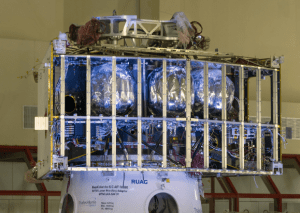 The next time you hear your friend talk about some satellite going to a planet, and he says how amazing it is, you can answer back in a way that would say nothing of the flat earth. Just ask some simple questions such as:
