FAQ About The Flat Earth

FAQ About The Flat Earth

As believers in the flat Earth it’s good to know the frequently asked questions about the flat Earth. Below is an 8 page PDF to help you answer critics. Print it out and use it as a reference. I’m sure you can add more to it. Let’s be able to answer any question both “in and out of season,” and be a good witness to the truth.

Click to access faq-flat-earth.pdf

Posted in Uncategorized | Tagged | Leave a comment

On The Stars

On The Stars

gif-stars1

(From an old flat earth booklet.)

THERE are definitely no solid bodies between the
earth and the dome of the sky. The stars are not
masses of matter, and they do not result either from
projections like the satellite discs of the earth.

Xenophanes in the 6th century B.C. thought that the
humid exhalations of the earth contained latent sparks
which, after some sort of condensation, formed the stars, and this explanation appears to be acceptable.

The astronomers of ancient Egypt believed also that
the stars were suspended from the dome of the sky
by cables, like lamps, and the fact is that on very clear
nights, filaments or lines connecting the stars of each
constellation can be clearly distinguished; from this
we may conclude that there exists above the earth a
network of ethereal cords, certain parts of which,
particularly at the intersections, condense and retain
permanently the radio-active emanations from the
earth, thus constituting the stars, in accordance with
the theory of Xenophanes. This does not exclude the
possibility of any effects resulting from the influence
of the dome of the sky or from the presence of the
sun during the day.* It is also evident, since all the
constellations are seen to move in bulk, that it is the
frame or structure, acting as their support, which
revolves and carries them along. It could, further,
be surmised that this stellar network above the earth
is, at intervals, subjected to phases of tension and
relaxation, which would have the effect of enlarging
or reducing the size of interstellar spaces; and also
that the volume of the earth’s radio-active emanations
varies according to seasons or other causes, therefore
increasing or diminishing the luminosity and the
number of the stars.

The stars are, thus, nearer the earth than the
satellite discs which move on the vault of the sky,
and this fact is in accordance with the theory of both
Anaximander and Parmenides. Concerning the supposed
occultations of the stars by the moon, it can be
said that it is not necessary that the latter should pass
in front of a star to render it momentarily invisible,
since the same result is achieved if the moon, the
brighter light of which causes the disappearance of
the star, passes at the back of it.

When we speak of a stellar network or system, it
is self evident that there are two such networks, one
over each half of the earth, which possess different
signs and constellations and meet over the equator.
It can be observed that the constellations make a
complete circle of that part of the heavens in which
they are situated, in one year, which is equivalent to
an approximate speed of one degree per day, and it

* Shooting stars are not to be confused with stars in the ordinary
sense. They are luminous manifestations which took place on the surface
of the dome of the sky as previously explained.

is this advancing motion of the constellations of one
degree per day which, for some incomprehensible
reason, has been attributed to the sun. In our regions
north of the equator this movement takes place from
west to east, in a direction opposite to that of the
satellite discs of the earth. As to the possible origin
of the motion of the stars, this could be determined
by a magnet action exercised by the metallic dome
of the sky, or perhaps by the passage of the daily
and semi-annual cosmic breath streams.

It has been said that there exists a regular retrogression
of the constellations of fifty seconds of
degree per year, and that this movement was first
noticed by Hipparchus in the 2nd century B.C. when
comparing his notes with those which another observer,
Timochris by name, had made one and a half
centuries beforehand. It would be necessary, in the
first place, to know whether the calculations these
two investigators made at an interval of one hundred
and fifty years are correct, and whether they must be
accepted, which is by no means certain; but why,
anyhow, has this retrogradation which was visible
and measurable in the time of Hipparchus, been
mysteriously transformed through the ages into an
invisible retrogradation? A difference of fifty seconds
per year is appreciable over a length of time, as it
amounts to one degree in seventy-two years, and it
should by now since the 2nd century B.C. equal
about thirty degrees. It is, however, impossible
nowadays to see this considerable difference in longitude
in the position of the constellations. These
always return to the exact spot they occupied in the
heavens the preceding years at a given instant. That
is to say that this retrogradation which Hipparchus
thought he had discovered, does not exist, and if it
does exist why, considering the importance which is
attached to it, does it not figure in any of the official
astronomical publications?

There is, therefore, no retrograde motion of the
zodiacal signs over each other. Aries, actually
presumably occupied by Taurus, is not in Pisces,
Pisces in Aquarius, etc. They are still, in the same
order, at the place they occupied in the beginning of
time. Further, the theory of the precession of the
equinoctial point which was derived from this supposed
retrogradation of the constellations, as extended
to the sun, cannot be substantiated.

Posted in Uncategorized | Tagged , | 1 Comment

The Immaterial Nature of the Satellites of the Earth, part 2 (of 2)

The Immaterial Nature of the Satellites of the Earth, part 2 (of 2)

FE Corona RevelationIt would, thus, appear that the satellite discs are not
reflections of the Earth like the Babylonians believed
in the case of the Moon, since the earth is not round.
They are either direct projections emanating from
luminous centres, or reflections on the vault of the
sky, of primary luminous projections. It has been, in
fact, said by the ancients, speaking of the Sun, that
it is only a reflection of a much greater and more
powerful sun existing in an exterior Universe.

If either of these two alternatives is correct, the great
difficulty, however, which still remains to be solved
in a satisfactory manner, is the motion itself of the
satellites. Now, in the course of research on light,
the author has come across certain experiments carried
out in the last century by the French physicist
Lissajou* whereby a spot of light reflected on a
screen is made to move, simply by imparting a vibration
to the surface from which this spot of light is
reflected; and the experiments in question seem to
supply the mechanism of the motion, including even
retrogradation, of reflected luminous projections on
the vault of heaven corresponding to the discs.
In these demonstrations, rays of light are allowed
to fall on a mirror fixed to one branch of a tuning
fork.

The spot of light thus obtained is reflected from
the mirror on to a second one similarly attached to
another tuning fork, and from there again reflected
on a screen. The screen, in this comparison, corresponds
to the vault of the sky, and the spot of light to
the various satellite discs of the earth. By letting
either fork vibrate alone, the motion of its attached
mirror will cause the spot to travel to and fro in a
straight line on the screen; but on account of the
persistence of vision we then see an unbroken line of
light. We now come to the important part of the
demonstration. If the two forks, with mirrors

* Jules, Antoine Lissajou, born in Versailles in 1822. Died 1880.
Carried out important research work on sound and optic. His reputation
was established by his Etude Optique des Mouvements
Vibratoires, 1873.

attached, vibrate together, the spot of light then
describes a curve, the form of which varies according
to the rate of vibration. The continuous luminous
curve is also created by a fast to and fro motion of
the spot of light, like the straight line obtained
previously by the vibration of one of the reflecting
mirrors only. Under these conditions the satellite
discs of the Earth may result from similar circumstances,
i.e., two successive reflections (the last one
on to the vault of the sky) of a primary luminous
projection, the motion being automatically created,
as well as the curved line of the orbit, by the vibratory
modes of the surfaces from which they are
reflected, as per the demonstration. If we suppose
the existence of slow vibrations, the retrogradation,
which corresponds to the to and fro motion of the
spot of light as reflected on the screen, would be
obtained; but in the case of the sun and the moon,
which do not retrograde, the vibrations of the reflecting
surfaces would be fast in order to conform to that
part of the experiment, where due to the persistence of
vision created by the rapidity of the vibrations, a continuous
curve is produced. It would, thus, appear
that since the results obtained by Lissajou reproduce
the characteristics displayed by the satellite discs of
the earth as regards their origin and their motion,
this explanation could be accepted. If experiments
were carried out thereby ascertaining the suitable
vibratory motions to be applied to the reflecting surfaces,
it is probable that a complete reconstitution of
the cosmic device could be affected.

Before becoming aware of the Lissajou tests,
which now seem conclusive,
the author was of opinion that the motion of
the disc satellites of the earth was due to a natural,
although unexplainable, moving projection device,
since the fast or slow, either direct or retrograde
movements, as well as the period of immobility of the
satellites, can all be reproduced by the mechanism of
cinematography.

As to the origin of the vibratory agents, the
author’s theory is that they result from the passage
of the semi-annual and daily cosmic breath streams,
of which they follow the increasing and decreasing
phases. It is stated in the Hindu texts, to which
reference has already been made, that the chariot (of
the Sun) becomes restless upon the arrival of dawn,
signifying here the breath of day, which sets it in
motion; and this might indicate that the simultaneous
vibrating of the two reflecting surfaces which determine
the ascending and descending movement of
the Sun, is produced and governed by the breath of
day. In that case, there would be a new sun every
morning, and this could perhaps explain the reason
of its obvious weakness upon rising and setting; in
the latter circumstance the usual flickering which
precedes the extinction of a light can readily be
observed.

The passage of the semi-annual increasing
and decreasing summer and winter breath streams
would also create in the reflecting surfaces correspondingly
increasing and decreasing vibrations,
affecting, thus, the yearly height of the sun. These
hypotheses may only constitute an imperfect solution
of the problem, but they may lead in the future, by
means of suitable research and experiments, to a
more concrete explanation.

The origin and situation of the luminous projector
centres would still have to be elucidated. Their size
may be very small, but the projections would be
greatly enlarged by the successive reflections, particularly
the last one on the vault of the sky. These
primary sources of light may be situated, as the
ancients thought in the case of the sun, in an exterior
Universe communicating with the interior of the
cavity which contains the earth by means of openings,
as early cosmogonies include many references to the
existence of doors and windows in the vault of the
sky. It is improbable that the exploration of sidereal
space, as far as it can be carried, will ever permit to
clear up the difficulty, or furnish information as to
the situation of the vibrating surfaces from which the
discs are reflected on the vault of the sky.

It can also now be understood that, since they are
reflections, the satellite discs of the earth cannot, of
their own, produce any sort of phenomenon; and if
spots or shadows appear in their circumference it is
clear that these modifications occur in the first place
either in the primary projector centre or on the reflecting
surfaces, or, perhaps, on the vault of the sky;
and that these modifications are reproduced eventually
in the interior of the discs. Circular currents
moving at unequal speeds at various latitudes have
been observed in the sun; and as these appear to
represent a rotary motion, it has been assumed that
the latter rotates on its axis at a speed of twenty-four
days in the region of its equator, and of twenty-five
days in the case of its other latitudes; but it can be
understood that these currents, or vortices, exist either
in the primary projector centre, or in the reflecting
surfaces, and that they are represented in the interior
of the solar disc, although these manifestations might
also be due to the disc’s motion on the reflecting convex
walls of the sky.

Some secondary satellites, or moons, are also said
to have been discovered round the satellite discs of the
earth, but they can be assumed to be optical illusions;
and that if they are not caused by a distortion of
vision in the objective, they may result from a multiple
refraction of the primary disc on the adjacent
walls of the dome.

It is necessary to recall what has previously been
said concerning the short distance of the vault; consequently
the luminous discs, called planets, which
move on the latter, are also less than one hundred
kilometers from the earth.

immaterial nature of the Moon, old flat earth booklet,

Posted in Uncategorized | Tagged , | Leave a comment

Elites Have Been Planning This for 100 Years

Plans For The Great Re-set

Global Re-set 12-2021

You can download this, video, too. Just look at the three little dots
on the bottom right of the screen.

Click Here to view

Posted in Uncategorized | Tagged | Leave a comment

The Immaterial Nature of the Satellites of the Earth, part 1 (of 2)

The Immaterial Nature of the Satellites of the Earth, part 1 (of 2)

Moon 6-2021

(From an old flat earth booklet.)

THE satellites of the Earth are not masses of matter.
They are luminous and transparent discs without
substance. The Moon, in particular, conveys the impression
of being an ethereal manifestation, and the
uncertain and illusive character which is usually
associated with this satellite results precisely from its
immaterial nature.

As already stated, the surface irregularities which
were thought to exist on the imaginary masses called
planets, are those of the dome of the sky, such as
they are seen through the transparent discs. The so-called
mountains, craters and depressions of the
moon are details of the structure of the dome. It may
be remarked in this connection that the astronomers
at the Mount Palomar Observatory in America have
recently reported that striking alterations have taken
place on the surface of the moon. Gigantic craters
and fissures of more than five hundred kilometers are
said to have appeared; and ranges of mountains as
important as the Alps have disappeared without
leaving a trace; but all those supposed alterations
correspond clearly to the successive structural features
of the dome which are progressively revealed by the
luminous and transparent disc of the moon as it
moves on.

This explanation applies also in the case of Mars.
The canals are most likely cracks, or may be dark
veins existing in the surface of the vault which are
seen through the disc. It has been observed that from
time to time the canals multiply and change their
form and their width, and that the dark regions,
called cases, which are also to be seen, expand or
shrink; but, as already said above, these changes
relate in fact to the gradual exposure of the vault
structure under the advancing disc. The same
remarks apply also to Jupiter which is said to have
undergone similar transformations. The notion that
the satellites of the earth are masses of matter, which
originated with Aristotle in the 3rd century B.C.,
has to be abandoned. There are no solid bodies
travelling in space, and the use in the vocabulary of
the word planet which has this erroneous meaning is
no longer justified.

It could further be said, concerning the true composition
of the satellites of the earth, that it might
have been discovered before to-day that the latter
are not masses of matter, in view of the fact that they
are able to remain at a standstill for several days
during the pause which follows their retrogradation,
irrespective of whether they are held to revolve round
the earth or the sun. It is obvious that during this
time, the supposed compensating forces which are
said to result from the movements of the planets.

and thereby hold them in space, would cease to
operate, due to the absence of motion. The only
physical law to which the planets would then be subjected
would be that of gravity and, under the circumstances,
they would normally be precipitated on
earth, or on the sun as the case might be. The fact
that the satellites are able to remain suspended in
space for days during the stationary period which
follows retrogradation indicates that they are not
masses of matter, and that they can only be luminous
manifestations, which fact is compatible with the
impressive silence ruling in the heavens.

It was recognised from the earliest times that the
satellites of the earth, particularly the sun and the
Moon was not solid, opaque bodies. They were
first, until Aristotle, considered to be souls or spirits,
which does not imply a physical nature. To the
ancients, they were simply lights, and they gave the
Sun and the Moon is a very apt name. They called them
luminaries. Xenophanes, in the 6th century B.C.
thought that the sun was an accumulation of sparks
resulting from the influence of Earth. Several
other physicists believed that it was a vitreous body,
or a lens reflecting the light of the ether, and this
theory which is based on observation is logical, considering
that the metallic nature of the surface of the
dome of the sky was probably unknown at that time.

As for the Moon, it is said that ages ago, long before
the beginning of the Christian era, the Babylonian
astronomer-priests were teaching in their temples that
it was a reflection of Earth. This supposition of
reflection is exact, but that of the origin of the reflection
is not, for the lunar disc, which is as perfectly
circular as possible, cannot be a reflection of the
earth since the latter is not round. Copernicus was the
first to assign this shape to the earth in order to support
the rotation. It should, moreover, be borne in
mind that the circular shape which Earth appears
to affect is merely due to the convexity of the dome
of the sky which bounds the horizon. The ancients
have always said that the earth is flat and this is confirmed
by the photographic records of a large number
of airmen, and also by the declaration of Prof.
Piccard when he ascended in the stratosphere. It is,
further, difficult to believe as it has been explained,
that the inhabitants of the Antipodes, as a natural
consequence of the rotundity of the earth, are able to
stand and walk, feet on earth and head down in the
manner of insects crawling on a ceiling. We may
reasonably think that the inhabitants of the whole
world walk in the same manner as we do, and on the
same plane, which is the horizontal surface of the
e arth; and it is undoubtedly that which would be
seen if Australia could be reached by television.
Since concrete notions have now been obtained concerning
the existence of a circular vault round the
earth, it logically follows that the latter is a plane
surface, apart, of course, from the irregularities of the
mountains, which fills with the oceans the lower part
of the cavity in which it is situated. The polar regions
would, therefore, lie flat and extend to the base of
some of the circular walls surrounding Earth.

immaterial nature of the Moon,

Posted in Uncategorized | Tagged , | Leave a comment

The Solid Dome Of The Sky, part 2 (of 2)

The Solid Dome Of The Sky, part 2 (of 2)

sun illumination 8

This shadow can only reflect off a surface. Could this surface be the “dome” or “firmament”?

The ancients have said that rain is part of the
waters which exist on the other side of the vault and
which pass on to this side through cracks. It may be
remarked, in this connection, that rain is always discharged
at the end of a thunderstorm, that is, after
the sound of the splitting of the dome, otherwise the
thunder, has been heard; and this fact would seem to
substantiate the theory of the ancients concerning
ram.

Lightning is a phenomenon which results from the
electrification of the vault; but it must be explained
that the luminous branches and ramifications which
are observed in what is called forked lightning, are
not lightning at all, strictly speaking; neither do they
traverse the atmosphere as is believed. They correspond
to luminous electrical currents which travel in
the vault of the sky itself where they follow irregular
tracks, probably metallic veins; and it can also be
seen that they adopt the convex shape of the vault.

These currents contribute eventually to the accumulation
at a certain spot of the quantity of electricity
which is required to cause a discharge towards the
earth, which occurs then in a direct line.

The comets, meteors and shooting stars are phenomena
which also have their origin, like the so-called
forked lightning, in the mass of the vault. The
author, definitely, knows this to be the case. Comets
are spontaneous luminous manifestations which are
created by electrical reactions occurring in the vault
of the sky, and this explains their unexpected and
sudden appearances, as well as their rapid and
erratic movements, indifferently direct or retrograde.

The passage of a comet is not accompanied by sound,
that is to say that there is no electrical discharge like
in the case of lightning which causes the vault to
split and detonate. It can be surmised that lightning
takes place in the thickness of the vault, whereas a
comet is a surface phenomenon. The orbit of comets
which may be seen to sweep across the vast expanse
of the sky is described as parabolic. This means, in
fact, since the passage takes place on the surface of
the dome, that the orbit follows exactly the curvature
of same and acquires, therefore, a seemingly parabolic
shape.

The formation of comets seems to be due to the
influence of the satellite discs of the earth as they
pass at certain points of the vault of the sky; otherwise,
when they occupy certain degrees of the zodiac,
particularly the 29th degree of Sagittarius. In the
case of Encke’s comet of December 21st, 1795, the
sun was at the 29th degree of Sagittarius. In that of
Brook’s comet of November ll th, 1911, Mercury
was passing at the same degree, and again for
Donati’s comet, October 2nd, 1858, it was Mars
which was effecting its passage at this very spot. The
same remark applies, moreover, to the 3rd degree of
various signs, particularly Gemini. In the last case
mentioned, that of Donati’s comet, Uranus was at
the 3rd degree of Gemini. For Hailey’s comet which
returned on March 4th, 1910, Mercury was at the
same degree; Venus at the 2nd degree of Libra;
Mars at the 2nd degree of Cancer; while simultaneously
Saturn passed at the 29th degree of Aries, etc.

All these circumstances, which cannot be coincidences,
point evidently to the existence of a mathematical
law governing the formation of comets,
through the combined agencies of the satellites when
they pass simultaneously at various degrees of the
zodiac ; and since the satellites have a regular motion *
it follows that the periodicity of comets, if it does
exist, may be due to this fact.

Shooting stars are not to be confused with the stars
in the ordinary sense, which form the constellations
and move at a very slow pace. They are luminous
manifestations which glide rapidly on the surface of
the vault of heaven, without any electrical discharge
towards the earth. They are, thus, related to vault
lightning, especially as they sometimes can be heard
to emit crackling sounds like sparks.

Meteors are also luminous phenomena resulting
from electrical reactions which occur in the vault of
the sky. It has been observed that they are frequently
accompanied by detonations and by a sound similar
to that of thunder, which is, therefore, caused by the
splitting of the dome, so that there can be no doubt
as to their real origin. It has been calculated that the
height of meteors never exceeds 90 kilometers, and

this figure confirms the estimate which is given further
on of the probable distance of the vault of the
sky from the surface of the earth.

From the ancients we know that the heavens at the
beginning of time were adjacent to the earth, which
is consistent with the primeval dislocation from the
surrounding mass; and that they were progressively
lifted in the course of ages. This rising of the vault
could not have been very great. The mere fact that
the latter can be seen through a telescope under the
satellite discs of the earth, as well as with the unaided
eye, as stated previously, indicates that it cannot
be very far away. It is not true, either, that man’s
eyesight can cover an infinite distance, even with the
help of the most powerful instruments, keeping in
mind at the same time a possible magnifying effect
due to the different densities of the various atmospheric
layers, so that it must be accepted that the
dome of the sky is incredibly low. If it were at an
enormous distance, meteorites would disintegrate and
become pulverised, and rain be volatilised before
reaching the earth.

There is not, and there never will be, an absolutely
reliable method whereby the exact distance separating
the surface of the earth from the sky may be ascertained.
It is very doubtful, as a matter of fact,
whether the laws of physics which apply to terrestrial
conditions, would be still valid in the case of the
upper atmosphere and of the spaces adjacent to the
top of the dome, but certain data can be taken into
account.

The height of the Heaviside layer, which is the
dome of the sky, has been measured by the time
taken by radar waves to return to earth. This distance
has been given as being from 40 to 50 kilometers in
the day-time, and 90 kilometers during night-time;
but the figure obtained for the day may be considered
unreliable, since it may well be believed that an
acceleration takes place in the propagation of the
waves due to the heat of the sun.

It is known, on the other hand, that the thickness
of the atmosphere has also been measured. But the
atmosphere is invisible, and since the dome is the
only surface on which the eye can rest, it is clear
that the thickness of the atmosphere means the height
of the dome. In the 11th century the Arabs, by
measuring the duration of twilight, assuming that
their method is acceptable, established that this thickness
is 92 kilometers; and nowadays, by the same
method, a figure of 64 kilometers has been obtained.

A similar indication comes from Ceylon where the
inhabitants claim that the dome is there particularly
low, being only 40 miles high, i.e. 60 kilometers
from the earth; and it does not necessarily follow,
whether this statement is based on conviction only or
not, that it is untrue. This figure is also consistent
with the impression of the author who has seen and
observed the dome of the sky during a sufficiently
long period of time to enable its probable distance to
be judged, as well as humanly possible; and the conclusion
is that the distance separating the surface of
the earth from the sky, and which may vary in some
places, does not exceed 80 to 90 kilometers. The
first telescope used by Galileo, which was of his own
construction, had only a three-fold magnifying
power. Nevertheless, he could with this small instrument
see the eminences of the vault, described by
him as being the mountains of the moon; that is to
say, that instead of saying 80 to 90 kilometers, 50 to
60 might be nearer the mark.

The vault of the sky may not be absolutely rigid,
but may at intervals, alternately recede and advance,
so that under these conditions the changes of atmospheric
pressure would obviously result from the varying
heights of the vault.

The azure colour of the atmosphere may be due
to the presence in the surface of the sky of certain
metals or of their alloys, which provide a blue colouring
matter, such as copper oxide or cobalt. This latter
metal, particularly, which is used for producing
blue coloured glass, is found in very large quantities
in meteorites, and its colour could be diffused by the
sun on to the atmospheric layers, even if they do not
completely reach the top of the dome as the latter
could cast a reflection from a distance.

It might also be inferred that the reddish tint of
the transparent disc of Mars is due to the fact that
the part of the dome which underlies its orbit contains
iron oxide which provides a compound of this
colour.

Posted in Uncategorized | Tagged , | 1 Comment

The Solid Dome Of The Sky, part 1 (of 2)

The Solid Dome Of The Sky, part 1 (of 2)

dome-under-1
FROM the earliest times it has been believed and said
that the heavens were not an empty space, but a
solid surface. The Chaldeans and Egyptians regarded
the sky as the massive cover of the world; and in
India and Persia it was thought to be a metallic lid,
flat or convex, or even pyramidal. Up to the 17th
century the earth was always regarded as the centre
of an empty sphere with solid walls; and on this
account, it was always represented with a cover. This
indispensable complement, however, was eliminated
upon the advent of the theory of gravitation, for convenience
sake, as a solid dome limiting the space
round the earth would have rendered impossible the
extravagant motions of the planets which were sent
revolving in the air at phenomenal distances. Thus
from this time, the fact universally accepted for thousands
of years that the sky is a firm surface, completely
disappeared.*

*It should be noted, however, that the notion of the massive nature
of the sly still subsists in the language. The word firmament means
firm surface and the French word “ciel” is derived from coelum,
which signifies chiselled material.

Nevertheless, the possible existence
of a solid vault over the earth is a question of great
importance in view of the tremendous consequences
which would result from this fact, if it happened to be
true. There is no doubt that the general reaction is one
of incredulity; but, on the other hand, it can be considered
that it is not without reason that the ancients
believed in the existence of the material vault of
heaven; nor without reason, either, that this notion
should have been consistently handed down through
the ages since the earliest times up to the I 7th century,
in all parts of the world. The only alternative
would be to be able to prove the fact, but it would certainly
appear at the present time that there is no means
of doing so. It may be discovered, however, that a
solid dome effectively exists above our heads, in an
indirect and quite unexpected manner, which the
erroneous interpretation put on the composition of
the planets had not so far permitted to do. It can be
stated at this juncture, by anticipating on the next
chapter which deals with this particular subject, that
the planets are not solid, opaque masses of matter, as
is believed. They are simply immaterial, luminous
and transparent discs; and in view of these circumstances,
it is plain that the craters, asperities, mountains
and valleys which were thought to exist on the
surface of these imaginary masses, are the topographic
features of the solid vault of the sky which
are illuminated and thrown into relief by the luminous
and transparent discs which we call planets. It is also
to be realized that the lens of the telescope creates an
appearance of convexity which, standing out in relief,
conveys the impression of a spherical mass, but this
convexity effect is merely an optical illusion.

The dome of the sky can be seen not only through
the transparent satellite discs of the earth with the
help of the telescope, but also with the naked eye, in
rare circumstances, it is true, i.e. when it is lighted by
flashes of lightning during night thunderstorms. By
a remarkable chance and in similar conditions,
the author has seen the vault of heaven entirely
illuminated, and has even been able to observe it
steadily for several minutes, due to a rapid succession
of sheet lightning discharges providing a perfect and
continuous visibility. The remark may now be made
that, if the ancients maintained that the sky was a
solid mass, it was for the reason that they had ascertained
the fact in the same circumstances, as many
observers will now be able to do in the future. The
possibility, therefore, of taking photographs by night
of large areas of the vault of heaven can now be foreseen,
particularly in those parts of the world where
owing to the frequency of thunderstorms, there are
numerous opportunities of doing so.

The aspect of the vault was that of a rather steep,
slightly sloping dome of pyramidal shape, and it
appeared to be composed of a bright metallic
dark grey matter, uniformly showing small regular
inequalities like lead which has been beaten or
chiselled. The larger details, particularly the craters,
were clearly visible against the background; but the
most impressive circumstance yet, was the incredible
nearness of the vault, the highest point of which did
not appear to be, at the most, any more than sixty
kilometers from the earth. It may be recalled in this
connection that in one of the texts of Homer, it is
stated that the height of the bell-shaped vault which
surrounds the earth is only twice that of Mount
Olympus, approximately six kilometers. This estimation,
evidently impossible, and which must have
probably resulted from the exceptional purity of the
atmosphere in Greece which may be deceptive, gives,
nevertheless, an idea of the manner in which this
question of the distance of the vault of the sky from
the earth, to which we shall return later on, is to be
envisaged.

It results, therefore, from the foregoing explanations,
that the existence of a dome of matter encircling
the earth cannot be denied; and this fact completely
revolutionizes the present day concepts on the outer
world. The earth is not freely suspended in space, but
it is resting on the floor of a cavity whose walls surround
it on all sides. The sidereal expanse does no
longer extend over unlimited and undetermined distances.

The dimensions of our Universe are now
known to be restricted, and they are confined by the
circular wall which encircles the earth. It is by this
obstacle that the radar waves are reflected; and we
may also recall, in this respect, the theory of Heaviside
leading to the existence of an upper, wave resisting
atmospheric layer, which is no other than
the solid vault of the sky. There is absolutely no
solid body between the earth and the dome of heaven,
since the constellations, like the planets, are nothing
but luminous phenomena.

The meteorites are obviously fragments which
become detached from the vault and reach the earth.
These masses when analysed prove to include a high
percentage of metal, from which we can conclude
that the inherent brilliance of the sky is due to the
presence of metals in its composition. The fact is
that the earth, at the beginning of time, must neces-
sarily have become separated from the adjoining
mass which constitutes now the vault of heaven; and,
therefore, the parts now divided must contain the
same elements. All the metals and ores of the earth
are consequently present in the surface of the sky.
An association is actually made between metals and
the sky, since the latter is instinctively compared to
lead and copper in very hot countries where broiling
temperatures intensify its metallic action and render
it more perceptible.

In classical literature there are two specific references
to the metallic nature of the sky, apart from
the one to be found in the Egyptian cosmology, but
the former may not be independent of the latter.
First, we read in the poems of Homer that star-strewn
Olympus, dwelling of the Gods, is made of glittering
bronze; and secondly, in the Old Testament, the
prophet Job gives what may be regarded as an exact
definition of the sky when he proclaims it to be a
mirror of metal. It is to be observed, in this connection,
that when poetical reference is made to the silver
mirror of the moon, it is the metallic surface of the
dome appearing under the transparent disc which,
in reality, may be described as a silver mirror. It
may further be remarked that in the mythology of the
Orient the attribute of the sun goddess is the sacred
mirror. This is another association with the true
nature of the vault; and it must be admitted that the
latter, especially when it shines and sparkles under
the sun, undoubtedly looks like a mirror.

It has frequently been observed that there is a
resemblance between glass and the sun. In the 6th
century B.C. Empedocles regarded the sun as a
vitreous body which collects and reflects the light of
the ether, but has no luminous power of its own.

The British astronomer Palmer, in the last century,
held the view that the sun is a lens which, he also
said, transmits to us the rays emanating from the
Almighty. It is further known that Ptolemy in his
system of the constitution of the Universe, speaks of
the existence of a crystalline sky, i.e. a sky in the
nature of a transparent mineral substance. One may
think, in this connection, that it is not impossible
that due to the heat developed by the passage of the
sun’s disc, there may be a fusion and vitrification of
the siliceous materials contained in the vault, so that
it becomes coated in certain places with a layer of
glass, which would communicate to the solar disc by
transparency, identical properties, so that it might
become similar to a lens. The presence of dross or
slag similar to that formed on fused metal has also
been observed on the surface of the sun, which is
really, owing to its transparency, the foundation of
the sky, and this seems to confirm the possibility of
thermal and chemical reactions taking place among
the elements which compose the vault.

It can now be understood that the light and the
heat which appeared to be produced by the sun do
not proceed from this source, but are due to a burning
glass effect which is generated by the brilliant
metallic surface of the vault under the luminous disc.
Under these conditions, all the vivifying and beneficial
properties which are attributed to the sun must
be transferred to the solid dome of the sky, as well
as the rays. These are not the sun’s rays, but they are
the rays of the metallic surface of the vault.

It is also obvious that the electrical discharges
which produce lightning take place between the mass
of the earth and that of the dome of the sky. It can
further be surmised that parts of the dome expand,
and split or explode under the stress of the passage
of the intense electrical currents and of their discharge;
hence the short detonations called thunder
claps, which are later amplified into loud rumblings,
and reverberated in the interior of the vast cavern
which contains the earth. It can further be remarked
that crashes of thunder are always immediately
followed by a metallic resonance similar to that of
bronze or brass; and it can be said that this particular
resounding, which is clearly perceptible, is certainly
produced by the metallic walls of the vault which
are made to shake and vibrate under the stress of the
detonations.

Posted in Uncategorized | Tagged , | 2 Comments

The Man of Sin Revealed

Revealing The Man Of Sin

Let no one in any way deceive you, for it will not come
unless the apostasy comes first, and the man of lawlessness is
revealed, the son of destruction, 2 Thessalonians 2:2-4

“They may build, but I will tear down; and men will call them
the wicked territory, and the people toward whom the LORD is
indignant forever.” And your eyes will see this and you will say,
“The LORD be magnified beyond the border of Israel!”
Malachi 1:2-5 (also see Romans 9:13).

Click to access revealing-the-man-of-sin.pdf

.

Posted in Uncategorized | Tagged | Leave a comment

On The Existence Of Day And Night

On The Existence Of Day And Night

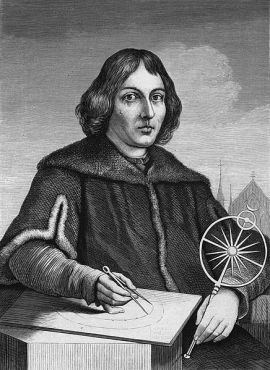
CopernicusCOPERNICUS had evolved another theory, which he
also explains in his Treatise on the Revolution of
the Celestial Spheres, that if a body is to revolve
round another, the first one must have a spherical
shape and rotate about its axis in the manner of a
spinning top. Consequently, in order to make this
notion fit in with the movement of the earth round
the sun which he had devised in order to explain the
seasons, he suddenly decreed that the earth was
round, contrary to the general opinion at the time,
and then proclaimed that it had a movement of rotation
about its axis. The great inconvenience in this
proposition is that the rotation of the earth cannot be
seen to exist, either with regard to the position of the
sun or clouds during the day, or of the moon and
other planets by night. On the other hand, the fact
of the immobility of the earth has an immense advantage
over the theory of the rotation in that it can
positively be recognized as such, and it can safely be
said that if the earth cannot be seen to move, there
are hundred chances in a hundred that it does not
do so.

The theory of the rotation of the earth, however,
may once for all be definitely disposed of as impracticable
by pointing out the following inadvertence.

It is said that the rotation takes twenty-four hours
and that its speed is uniform, in which case, necessarily,
days and nights should have an identical duration
of twelve hours each all the year round. The sun
should invariably rise in the morning and set in the
evening at the same hours, with the result that it
would be the equinox every day from the 1st of
January to the 31st of December. One should stop
and reflect on this before saying that the earth has a
movement of rotation. How does the system of gravitation
account for the seasonal variations in the
lengths of days and nights if the earth rotates at a
uniform speed in twenty-four hours? At all events,
we have previously seen that there is no such movement
as the revolution of the earth round the sun;
and as the rotation was its sine qua non, it automatically
fails at the same time. There is also reciprocal
invalidity; if the rotation is manifestly impossible as
demonstrated above, the translation which was
uniquely derived from this movement, becomes void.

Further, if flying had been invented at the time of
Copernicus, there is no doubt that he would have
soon realized that his contention regarding the rotation
of the earth was wrong, on account of the relation
existing between the speed of an aircraft and that
of the earth’s rotation. The distance covered by an
aircraft would be reduced or increased by the speed.

On the fact that the earth does not rotate 
of the rotation according to whether such aircraft
travelled in the same direction, or against it. Thus,
if the earth rotates, as it is said, at 1,000 kilometers
an hour, and a plane flies in the same direction at
only 500 kilometers, it is obvious that its place of
destination will be farther removed every minute.
On the other hand, if flying took place in the direction
opposite to that of the rotation, a distance of
1,500 kilometers would be covered in one hour, instead
of 500, since the speed of the rotation is to be
added to that of the plane. It could also be pointed
out that such a flying speed of 1,000 kilometers an
hour, which is supposed to be that of the earth’s
rotation, has recently been achieved, so that an aircraft
flying at this rate in the same direction as that
of the rotation could not cover any ground at all. It
would remain suspended in mid-air over the spot
from which it took off, since both speeds are equal.

There would, in addition, be no need to fly from one
place to another situated on the same latitude. The
aircraft could just rise and wait for the desired
country to arrive in the ordinary course of the rotation,
and then land; although it is difficult to see how any
plane can manage to touch ground at all on an airfield
which is slipping away at the rate of 1,000 kilometers
an hour. It might certainly be useful to know what
people who fly think of the rotation of the earth.
It could also be said that if the earth did rotate,
such motion, as in the case of its assumed revolution
round the sun, would create in all directions apparent,
fast and erratic movements of the planets and constellations,
whereas, in fact, the movements ruling in
the heavens are extremely slow and perfectly orderly;
and notwithstanding the artless explanation that has
been offered that everything goes so fast that nothing
can be seen to move at all.

It has also been endeavoured to explain day and
night, probably by way of giving an opportune and
additional utility to the rotation, apart from its indispensable
role in the assumed revolution round the
sun, by the fact that the two halves of the earth are
alternately exposed to the rays of the sun in twenty four
hours. But day and night do not result from a
play of light and shade caused by a turn of the earth.

As it can be realized by anyone, daylight is produced
by the arrival and passage of the sun, and night by
the disappearance of the latter. It is daylight when
the sun rises, and night when it sets. There is no
need at all for the earth to revolve in order to create
these facts of nature, the cause of which is evident
and sufficient unto itself.

A factor, however, other than the presence and
absence of the sun, might be taken into account in
the alternation of day and night. It is known that the
ancients insisted on the fact that day was caused by
a luminous vapour, and night by an opaque sort of
fog; but this explanation is not satisfactory as far as
night is concerned, as the stars would not be visible,
or at least, they would be obscured. What may be
assumed, in reality, is the presence of a warm cosmic
breath during the day, and of a cold one during the
night, to correspond respectively to the warm breath
of the summer and the cold breath of the winter as,
no doubt, day and night are on a small scale what
the two main divisions of the year are on a large one.

There is, moreover, a noticeable increase of temperature
after mid-day, which points to the existence of a
breath in its phase of expiration. The passage of this
On the fac t that the earth does not rotate 13
breath of day would begin in the early morning at
dawn, the usual pause between inspiration and
expiration taking place about mid-day; and we have,
in this connection, the infallible test of the behaviour
of man, who by reflex action, stops work at this
moment for a time. The passage of the warm day
breath would, then, end at dusk upon the arrival of
the cold night breath stream.

It might be considered that the breath of day has
a certain luminosity in view of the fact that it is daylight
long before sunrise, and also that the light persists
after sunset, as well as during total eclipses of
the sun. It can be seen from photographs taken during
such eclipses that the details of the landscape,
buildings and objects remain visible, so that the presence
of a luminous factor not dependent on the sun,
but provided by the breath of day can be assumed.

The cold breath of night would, inversely, flow
from nightfall to dawn, with the usual interval some
time after midnight. There is a sharp drop of temperature
about this hour, which corresponds to the
increased intensity of the cold night breath in its
breathing out phase.

There is an opposition in the circulation of the day
and night breaths round the world, so that when one
is north of the equator, the other is south of the
equator, and vice versa.

The day and night breaths are certainly connected
with, and influenced by the greater breaths of summer
and winter, and it is, therefore, their combined
actions which regulate the height of the sun and the
hours of its rising and setting; but not directly, as
said before, but through intermediate circumstances
which are explained later on.

As to the origin of these breath streams, it may
only be surmised that they emanate from living cosmic
centres possessing the organic function of respiration,
and that they are situated in some distant
regions outside our immediate Universe.
It is also possible that there may be a connection
between the v^rinds and these cosmic breaths. There
are winds which prevail regularly during certain
seasons of the year and which, under the circumstances,
might correspond to the semi-yearly breaths
of summer and winter. Further, high-flying American
airmen have reported the existence of a vast, high
altitude current of air, six miles deep and three hundred
miles wide, circling at a fantastic speed round
the northern hemisphere; and from Australia similar
reports indicate the presence of a corresponding high
velocity air stream south of the equator. There might
be an analogy between these recently discovered air
currents and the semi-annual cosmic breath streams.
As to the breath of day, it might have a connection
with the lesser winds which rise in the morning and
drop in the evening.

It would also appear that the breath streams are
accompanied by vibrations or cosmic pulsations; the
breaths of day and night, by twelve pulsations each,
which are the hours; and the semi-annual breaths of
summer and winter, by six great pulsations each, of
a duration of thirty days. These are the months.
It could be added that it is probably the regular
and constant flow of these cosmic breaths which constitutes
the passage of time.

Posted in Uncategorized | Tagged , | Leave a comment

The Non-Revolution of the Earth

The Non-Revolution of the Earth


ROUND THE SUN
AND
ON THE EXISTENCE OF A SUMMER AND OF A
WINTER COSMIC BREATH STREAM

next time transcontinenal map3

From a book written about 100 years ago.

Copernicus put forward the hypothesis of the revolution of the earth round the sun in order to explain the cycle of the seasons. His theory is not very satisfactory seeing that the earth is supposed to be at its greatest distance from the sun in the summer during the hot weather, and at its shortest distance in the winter when the temperature is at its lowest. These unusual conditions which clearly contradict the laws of nature as regards the effects of heat, are it is said, due to the angle formed by the rays of the sun as they fall on the earth’s surface. It is also stated that
the opposition of the seasons north and south of the
equator is due to a tilt of the earth, first on one side,
and then on the other, which conveniently occurs at
the right moment. Nothing is said, however, of the
shifting of the waters of the sea and rivers which this
change in the centre of gravity and in the position of
the earth would inevitably bring twice a year. It
might also be assumed that under those conditions,
very high constructions would swerve from the
vertical. The American sky-scrapers and the Eiffel
Tower, for instance, cannot be seen to lean right or
left according to the seasons, although this should be
a logical and natural consequence of the alternate
inclination attributed to the earth.

It must reasonably be said that the circumstances
which readily explain in the most extraordinary and
unlikely way the cause of the seasons are not credible,
especially in view of the fact that Copernicus,
when he published his theories on the movement of
the earth in his Treaty on the Revolution of the
Celestial Spheres in 1543, insisted on their purely
hypothetical nature. He said : “The hypothesis of
the movement of the earth is only one which is useful
to explain phenomena, but it should not be considered
as an absolute truth.” It was never his
intention, it seems, that his theories should be taken
in earnest by his successors.

The motion of the earth in space can be disproved
by a comparison between the supposed speed of the
earth and that of the other planets, if we base our
considerations on the principle that a body in motion
creates an apparent speed equal to its own, in bodies
it encounters, which is usually demonstrated by the
experiment of a moving vehicle, such as a train. It is
difficult to judge at first sight whether it is the train,
or what can be seen outside which is moving away,
but one fact is certain, i.e. that the two speeds, one of
which is real and the other apparent, are equal. For
this reason, if the earth were in motion, it would
create in the planets and constellations an initial
apparent speed equal to its own. Consequently, there
can be no speed in the heavens lower than that of
the earth’s, since it represents a basic speed from
which the apparent motions would be derived; but
as it can be seen, the displacement of the constellations
and of the planets, with the exception of Mercury
and Venus, is slower than the supposed speed
of the earth, which under the circumstances stated
above, is a material impossibility. It should, moreover,
be considered that the real speeds of the planets
have to be added to the apparent motions created by
the supposed movement of the earth, with the result
that the planets ought to pass before us like a flash
of lightning. The absence of these mathematical circumstances
which, surely, have no reason to be
invisible, ought to be sufficient to prove that the
hypothesis of the revolution of the earth round the
sun as put forward by Copernicus, has no basis in
fact, and is not admissible, even if such theory could
not be replaced by anything more logical, as it is.
An entirely different and more rational explanation
of the cycle of the seasons, based on a reasoned
investigation of existing conditions can, however, be
given, so that it will no longer be necessary to send
the earth travelling into space to this end.


The essential feature of the year is its division into
two equal periods of six months, based first on the
predominating length of the days over that of the
nights, and vice versa, conditions which are governed
by the varying hours of sunrise and sunset; and
secondly, by the either high or low height reached by
the sun in the heavens at mid-day. The first cycle,
during which the days are longer than the nights and
the sun reaches its culminating point of the year
extends from the spring equinox to the autumn
equinox, i.e. March 21st to September 22nd; and
the second cycle during which, inversely, the duration
of the nights exceeds that of the days, and the
sun descends to its lowest point of the year, extends
from the autumn equinox to the spring equinox, i.e.
September 23rd to March 20th.

These two six-month periods are also characterized
by an opposition to temperature. During the
first cycle which corresponds to spring and summer,
the heat gradually rises and falls, while during the
second cycle which comprises autumn and winter,
it is the intensity of the cold which progressively
increases and decreases. It might be said that it is
evident that the heat of the summer and the low
temperatures of the winter result from either the high
or low height reached by the sun at mid-day, and
also from the alternate predominating length of the
days over the nights, although it might not be absolutely
certain that the variations of temperature are
entirely due to these particular circumstances. But to
what reason must be attributed the variations which
exist in regard to the sun’s daily height and the hours
at which it rises and sets, which seem to determine
the various temperatures of the year? These regular
fluctuations must, necessarily, have an origin, and it
might be remarked that no scientific research or
speculation has ever been attempted in this direction.

The sun has been compared by the ancients to a
chariot drawn by steeds and to a boat manned by
rowers, meaning by this that it is not self propelled.
Its movement, therefore, is derived from some external
power, and in that case it would appear that the
variations in the height of the sun and its hours of
rising and setting are due to the passage and to the
impulsion of two regulating successive currents, or
cosmic breath streams, of six months each, i.e. of a
warm increasing and decreasing breath stream prevailing
from the spring equinox to the autumn
equinox, followed by a cold, increasing and decreasing
breath stream from the autumn equinox to the
spring equinox; and the conclusion is that the impulsion
of these two summer and winter cosmic breaths
govern the height of the sun, and that they also have
the effect of either advancing or retarding the hours
of sunrise and sunset on which depend the respective
lengths of days and nights.

It is, therefore, the arrival and growing intensity
of the warm summer breath stream which from
March 21st  causes the sun to gradually ascend to its
culminating point of the year at the June solstice,
and the decreasing intensity of this same warm
stream which, after the solstice, causes the height of
the sun to decline steadily until the 22nd of September,
moment of the equinox, when the cold current
sets in. At the same time, the impulse of this warm
cosmic breath stream has the effect of advancing the
hour of sunrise and of retarding that of sunset, so
that the days become longer than the nights. On the
other hand, it is the arrival and growing intensity of
the cold winter breath stream about the 23rd of September
which causes the sun to further descend to its
lowest point of the year at the December solstice, and
the decreasing intensity of this cold breath which,
after the winter solstice, causes the sun to rise again
until the 21st of March when the warm breath takes
over. At the same time, the cold current has the
effect of retarding the hour of sunrise and of advan-
cing that of sunset, whereby the nights become longer
than the days.

As it can be seen, these two semi-annual cosmic
currents or streams, warm and cold, each represent a
complete breath comprising a rising phase of inspiration
from the equinox to the solstice, and a falling
phase of expiration from the solstice to the following
equinox; and it is these two double phases of a duration
of three months each, controlling the daily height
of the sun and the hours of its rising and setting,
which causes the four seasons.

It may be explained that the principle of the existence
of cosmic breaths is not new, and that it is to be
found in the cosmogonies of the Orient. It has, here
in particular, been borrowed from a French translation
of Hindu texts in which the movement of the
sun was said to respond to the influence of universal
breath streams. The author has adapted this theory
to existing circumstances, thus permitting the specific
respiratory nature of these cosmic breaths to be discovered.
This fact is completely demonstrated, apart
from the obvious parallel of the phases of inspiration
and expiration rhythmically governing the lengths of
days and nights and the height of the sun, by a comparison
with another factor which is the pause existing
between inspiration and expiration. This pause is
precisely reproduced by the solstice which corresponds
to the stoppage of the cosmic breath between
the two phases. The existence of a breath governing
the movement of the sun becomes here manifest,
since the height of the latter at midday does not vary
during the solstice interval, nor do the hours of its
rising and setting. The respective lengths of the day
and of the night remain unchanged, the sun rising
and setting at the same hours for no less than five
days.*

It could be added as a further proof of the existence
of a cosmic breath, that the high temperatures
of July and August which are really abnormal, since
it should be cooler as they occur when the days
become shorter and the height of the sun decreases,
are due to the fact that, as in the function of respiration,
the pressure of the breathing out is greater
towards the middle of the expiration phase, and 

consequently, the temperature rises. On the other hand,
it is observed that the cold becomes more intense in
January and February, although the days are growing
longer and the decrease in the intensity of the cold
breath is causing the sun to rise. This recrudescence
of the cold is due to the same reason of pressure
increase in the middle of the phase of expiration, and
the cosmic breath being cold, it follows that there is
a further drop of temperature during this period;
from which it can be seen that the pressure of the
respective cosmic breath streams is susceptible of
warming, or cooling the atmosphere as the case may
be, regardless of the height of the sun.
On the non-revolution of the earth round the sun.


Footnote: It may be remarked that during the time of the solstices when the
height of the sun at midday is stabilized for a few days either at its
highest or lowest point in the heavens, man, by reflex, follows the
cosmic conditions by stopping his working activities and taking a rest.
These particular moments are also the occasion of great religious
Christie festivals; Christmas at the winter solstice and Corpus Christi
at the time of the summer solstice, which points undoubtedly to the
existence of an association between the sun and Christ. This association
exists also in the case of the Easter festival of the resurrection of
Christ, which in reality celebrates the solar new year. Easter takes place
on the Sunday following the new moon after the spring equinox on
March 21st, which date marks the beginning of the spring and summer
cycle of the sun, when the height of the latter at noon begins to rise over
the equator according to the actual astronomical way of reckoning th&
solar declination.

It is also obvious that the opposition of the seasons
north and south of the equator result from a corresponding
opposition in the circulation of the two
breaths round the earth, i.e. when the warm breath
is in the northern hemisphere, the cold one is in the
other, and vice versa, so that it is simultaneously
summer in one part of the world and winter in the
other. Thus, the warm six month breath which commenced
in the northern hemisphere at the spring
equinox, comes to an end at the autumn equinox,
about the 22nd of September, when the transposition
of the warm and cold breaths takes place. The warm
breath passes in the southern hemisphere for the
spring-summer cycle, and at the same time the cold
breath leaving said hemisphere enters ours for the
autumn-winter cycle. The respective intensities of
the two breaths, both at the end of their expiration
phase at the moment are, thus, equalized so as to
permit their transposition, and at the same time, the
lengths of the day and night find themselves also
equalized to twelve hours each in both hemispheres.
It is also most probable that the atmospheric disturbances
which prevail at the time of the equinoxes are
due to the mutual replacement of the breaths, and to
their passage in a different part of the world.
It should be added, however, that in the above
theory concerning the cycle of the seasons, the cosmic
breaths do not act directly on the sun, but that there
are intermediate circumstances which will be dealt
later on with regard to the origin itself of the sun.

Posted in Uncategorized | Tagged | Leave a comment