
Why Russia’s Airspace Ban Is a Bigger Deal Than You Think
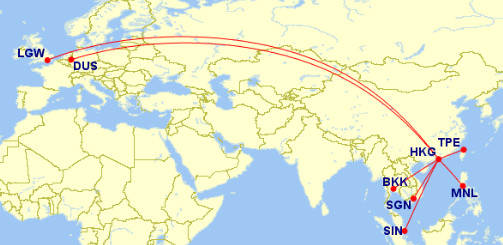
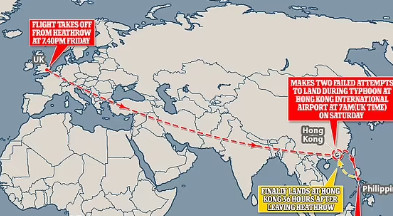
That’s because the earth is flat. For all this time we were told that to fly from Asia to the US, you don’t fly over Russia – you go directly over the Pacific Ocean.
.
.
Note: Below is basically a transcript of the audio. The underline text should be of interest to flat earthers. Below this article are some questions you might want to ask your globe earth believers and let them think about it for a while.
In our interconnected modern world, global air travel is often taken for granted. We assume that the skies are a global common, a highway system that allows people and goods to move freely between continents. This assumption is a cornerstone of globalization, economic stability, and, more quietly, American military power.
On December 22nd, 2024, Russia shattered that assumption. In a move that rippled through military command centres and airline operations centres, Moscow announced the immediate closure of its critical airspace corridors to all US-registered aircraft. This is not a symbolic gesture or a temporary diplomatic spat. It is a calculated strike at the heart of American global mobility, with profound implications that go far beyond longer flight times.
This move exposes a vulnerability that Washington has ignored for decades, challenging the very foundation of its military strategy and economic influence. But this is more than a diplomatic spat or a logistical headache. It’s a deliberate strike at the core of American power. Here are the four biggest takeaways you won’t hear in the mainstream news.
This Isn’t Just Russia—It’s the Start of a Coordinated Challenge
The most critical aspect of this airspace closure is that Russia did not act alone. This event transforms from a bilateral dispute into the opening move of a coordinated strategic challenge designed to overextend and exhaust the United States. This is evidenced by recent, tangible actions, not just backroom consultations. In November, Chinese and Russian military forces conducted joint air patrols near Alaska, a clear signal of their willingness to challenge US airspace dominance. Following Moscow’s move, intelligence sources indicate China is reportedly considering similar restrictions, and Iran has already signaled its support.
The strategy is known as “asymmetric exhaustion.” Instead of confronting American power head-on, where the U.S. excels, multiple powers are challenging Washington on different fronts simultaneously. While Russia weaponizes its airspace, China builds and militarizes islands in the South China Sea to control vital sea lanes, and Iran disrupts shipping in the Persian Gulf. Each action alone is a manageable crisis; together, they force the United States to defend an unsustainable global perimeter, stretching its military and economic resources thin.
This coordinated aspect is the most explosive part of the story. It suggests the formation of a strategic bloc intent on dismantling the U.S.-led international order piece by piece. If China follows Russia’s lead, the entire premise of American air superiority, particularly in the Pacific, could collapse.
The strategy is called asymmetric exhaustion. Don’t fight the hegemon head-on. Instead impose costs across multiple fronts until the centre cannot hold.
They’re Attacking the Dollar, Not Just Airplanes
The immediate economic costs are clear: US airlines face an estimated $15 million per day in added fuel and operational expenses, and consumers will see ticket prices for trans-Pacific flights rise. But the real target is deeper—the economic architecture that underpins American power.
By forcing US carriers onto longer, less efficient routes, Russia is deliberately undermining the dollar-based global aviation system. As routes become less profitable for American carriers flying American-made Boeing jets, airlines may shift to more efficient aircraft built in Europe or China. This slowly chips away at demand for American manufacturing and, by extension, the industrial base that supports U.S. military aviation.
This is economic warfare in disguise. The goal is not just to impose temporary costs but to accelerate a long-term structural decline in the American military-industrial complex. The closure attacks the very engine that funds and builds the tools of American air power, turning commercial logistics into a weapon against Washington’s strategic endurance.
They’re not just closing airspace. They’re attacking the economic engine that funds American air power.
The Myth of “Global Reach, Global Power” Is Broken
Since the 1944 Chicago Convention, the United States has built and maintained an international order where the skies were effectively an “American highway.” This agreement, signed before World War II even ended, established the rules for global aviation and locked in American dominance. After the Cold War, this access was considered absolute, forming the core of the U.S. Air Force’s doctrine: “Global Reach, Global Power.”
This doctrine was based on a simple, unshakable assumption: the U.S. military could fly anywhere on Earth, at any time, to project power within hours. Russia’s decision has single-handedly broken that 80-year-old assumption. For example, the deployment time for bombers stationed in North Dakota to reach the Indo-Pacific has now increased from 12 hours to 18-20 hours. This fundamentally alters the operational calculus for an Air Force built on speed and surprise.
The psychological impact of this shift cannot be overstated. For decades, every U.S. military operation was planned with the belief that access was a given. Now, that foundation has proven to be a privilege, not a right—and that privilege has been revoked.
For decades the skies were an American highway and everyone else just rented lanes.
America’s Allies Are Watching—And Doubting
Russia’s move is a masterclass in asymmetric leverage. It is using its vast geography—a permanent, unassailable asset—to inflict significant military and economic costs on the United States, a country that cannot retaliate in kind. Closing American airspace to the few Russian planes that fly there has no equivalent effect.
This demonstration of leverage is being watched closely by America’s allies, particularly Japan, South Korea, and Taiwan. They are asking a simple but corrosive question: If Washington cannot even guarantee its own flight paths, how can it guarantee their security against a threat like China?
This plants a seed of doubt that erodes America’s most important strategic asset: its global alliance network. When allies question the credibility of U.S. security guarantees, they begin to “hedge” their bets. They may quietly build stronger ties with China or soften their rhetoric toward Russia, seeking to secure their interests in a world where American protection is no longer certain. This slow fraying of alliances is how a superpower’s influence unravels.
This is how empires fall. Not through invasion but through irrelevance.
The closure of Russian airspace is not a temporary crisis to be managed but a structural shift that signals the definitive end of an era. For three decades since the fall of the Soviet Union, the United States operated as if geography didn’t matter and its dominance was permanent. This move is a stark reminder that power is fragmenting, geography is once again a weapon, and the world has become far more contested.
This is the new reality of a multipolar world—a world of friction, barriers, and strategic competition. The post-Cold War vacation from history is over.
The only question is how Washington will adapt to a world where it is no longer the sole superpower, but merely one power among several. That adaptation will define the rest of this century.
Questions to Ask Yourself
1 Why didn’t Russia close this airspace from the start of the war?
2 Why didn’t the US and EU stop flying over Russia from the start of the war?
3 Why would the US and EU worried about this?
4 Why have passengers been told that they are flying over other countries than what they really are, such as from Hong Kong to the US?
5 Why are flights going to take much longer?
6 Why wasn’t the Soviet airspace closed during the cold war?
My answers to the above.
1 Because the world governments, including Russia, wanted to keep the lie going about the globe earth. After all, Russia “sends astro-nots” into space,” too!
2 The same answer goes for the EU and other countries that are at war with Russia.
3 Because more people will wake up to the flat stationary earth, as it would start making people think and ask questions. Since the world’s governments have been lying to us about the nature of earth, it would be very embarrassing if they admit the truth now. They would lose all credibility of anything that they say in the future and what they said in the past.
4 To keep the passengers in the belief that earth is spinning globe. For, if we were on a globe, it would not make sense that certain flights have to fly to the far north when a more southern route would be more practical on a globe earth.
5 The flights will take longer, cost more in fuel for the obviously reason that military and commercial flights will really have to fly in southern latitudes to reach their destination because they have more land and ocean area to cover.
6 During the so-called “cold war,” other nations were allowed to fly over the Communist Soviet Union. If the Communists really wanted to harm Europe and the US without going to war, this could have been done. The reason why the airspace was not closed off is because, the Soviet Union wanted to keep the lie that we were on a spinning ball travelling through space with billions of other planets. Being that the Communists were anti-Christ and ant-Christian, they realized if they told the truth about construction of the earth – which they well knew – than their people would realise that we are a creation of God Almighty and that the Bible is, indeed, true. This, they could not allow, as their whole propaganda machine was based on evolution and that we were just a mere speck travelling through space at incredible speeds.

 Christian Flat Earth Ministry
Thank you. I am a Christian and just discovered FE is true. I am really am interested in accessing the information on the website under World War I and II but can’t as they I believe have been taken down. Can you please help me?
LikeLike
Do you have a VPN? This hides your IP address. The companies that supply this cost about £40 or more. I hope this helps. Since you can access this site, you should be able to find search results by typing in something like: World War II, as there are several articles about this on this site.
LikeLiked by 1 person